

THE FREEDOM GAME:
How to Win at Being Human

Freedom isn’t Something You Achieve. It’s Something You Stop Blocking.

Patrick Whelan writes about freedom, choice, and the invisible systems that shape how we live, react, and repeat patterns without realizing it.

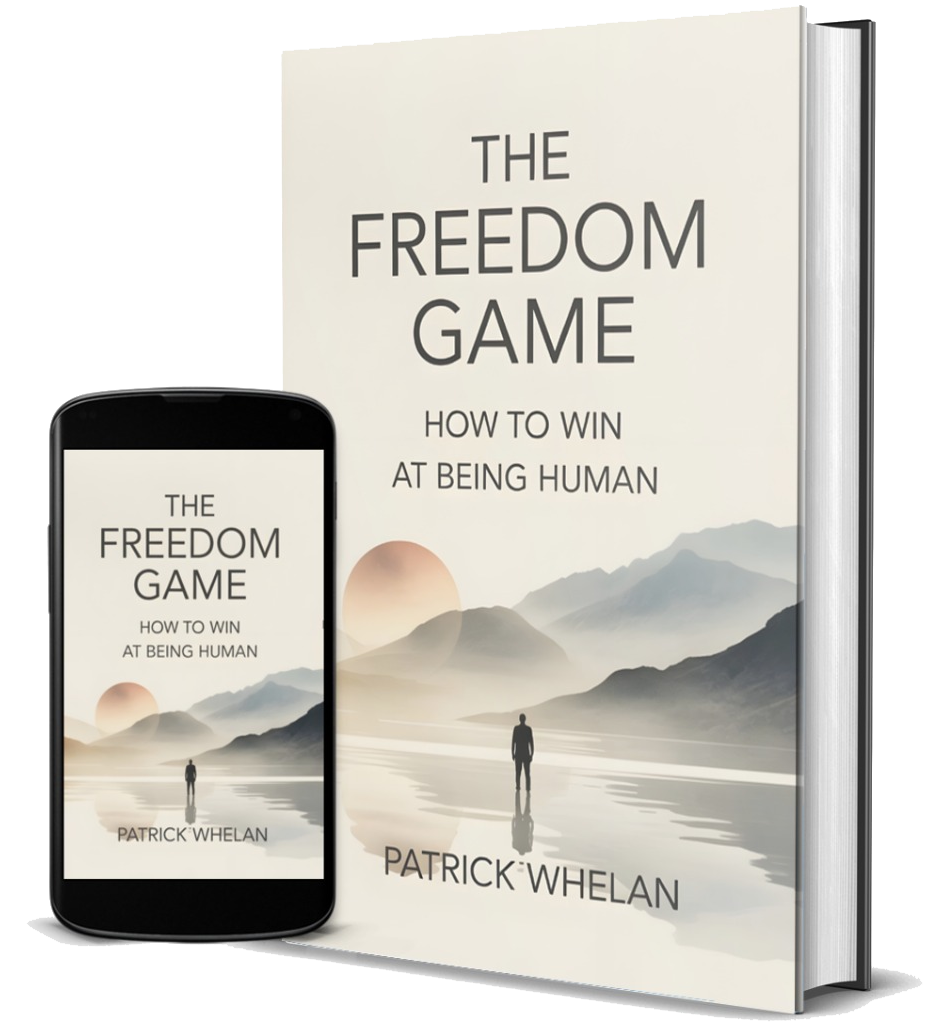
THE FREEDOM GAME: How to Win at Being Human

Freedom isn’t Something You Achieve. It’s Something You Stop Blocking.

Patrick Whelan writes about freedom, choice, and the invisible systems that shape how we live, react, and repeat patterns without realizing it.

About The Book

You are not broken. You are playing a game you were never taught how to play.

The Freedom Game explores why insight alone doesn’t create change, and how safety, identity, and perception quietly shape the patterns we live inside every day.
This is not a self-improvement book. It’s a way of seeing clearly enough that choice returns naturally.

my latest book

What's inside the book. Chapters covered

Immersive World-Building

Experience the sights, sounds, and secrets of an ancient empire brought vividly to life.

Complex Characters

Follow a cast of richly developed characters, each with their own motives, ambitions, and vulnerabilities.

Riveting Plot Twists

Stay on the edge of your seat as unexpected twists and turns keep you guessing until the final chapter.

Acclaimed Author

Written by Claudia Yeoh, known for crafting compelling, emotionally impactful stories.

Historically Inspired Details

Delve into a narrative woven with real-world historical elements, making the story both educational and entertaining.

Themes That Resonate

Explore universal themes of power, loyalty, betrayal, and redemption that connect deeply with readers.

Available on Amazon

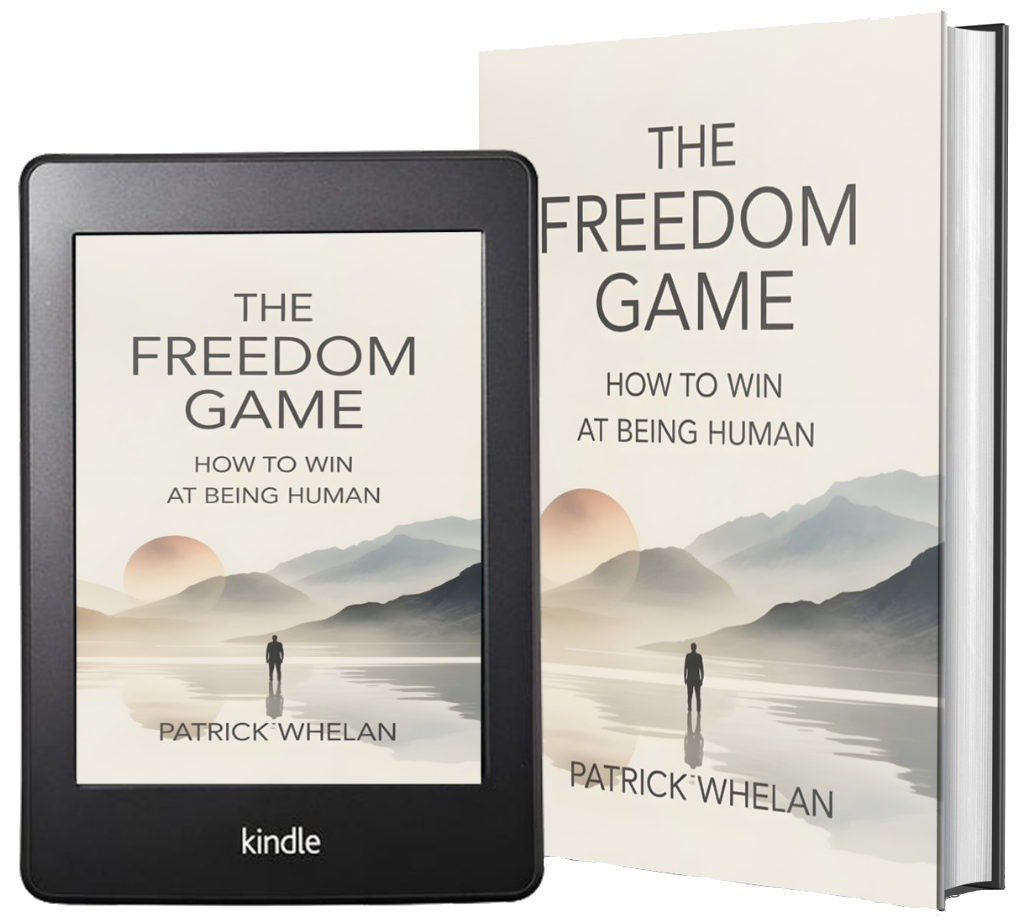
The Freedom Game is available worldwide on Amazon.

The Freedom Game is available worldwide on Amazon in paperback and digital formats. Readers who prefer a printed edition can purchase the book directly from Amazon in their region

About The Author

This work didn’t find me because I was ready. It found me because I was paying attention.

Patrick Whelan is an Irish writer exploring freedom, choice, and the invisible systems that shape human behavior. His work bridges psychology, nervous-system science, embodiment, and consciousness—not as theory, but as lived experience. What began as a personal search to understand his own patterns evolved into a framework for seeing how safety, identity, and awareness quietly govern what feels possible in everyday life.

Frequently Asked Questions

Find answers to your questions about my books, events, and more.

No.

This book doesn’t offer formulas, promises, or techniques for “manifesting” outcomes. It explores how internal states—shaped by safety, identity, and perception—quietly influence behavior, and how behavior shapes life over time.

It’s less about creating a new reality and more about seeing clearly how the current one is being lived.

No.

The book uses the word consciousness to mean awareness—the ability to notice thoughts, emotions, and sensations without being overwhelmed by them. This is experiential, not religious.

Skepticism is welcome. Belief is not required.

No.

The Freedom Game is not therapy and does not replace professional medical or psychological support. Many readers find it complements therapy by helping them understand why insight alone often isn’t enough for lasting change.

Feeling stuck isn’t failure. Often, insight hasn’t yet moved into the body. The nervous system may still associate change with threat. This book emphasizes embodiment before evidence—creating safety first, so new patterns can become familiar rather than forced.

No.

These terms are used metaphorically, to describe the felt experience of choice and possibility—not to make claims about physics. They’re tools for perspective, not scientific assertions.

No.

Letting go means releasing resistance—to the present moment, to outcomes, to outdated identities. It’s not passive. It often creates more clarity and cleaner action.

Giving up collapses energy. Letting go restores it.

No.

The word game is symbolic. It points to patterns, rules, and feedback loops in how we perceive and react. It doesn’t minimize pain or suggest life is trivial.

Seeing the game isn’t about winning—it’s about participating consciously, even in difficulty.

Slowly.

The book is designed sequentially. Each part builds capacity for the next: awareness before responsibility, safety before change, embodiment before evidence. You’re invited to let things land rather than rush toward application.

There’s no ideal state to reach.

If you notice more, judge less, and return to choice more often—even briefly—something is shifting.

That’s okay.

Read when curiosity appears, not urgency. This work doesn’t operate on deadlines.

You are not late.

If your questions aren’t answered here, that’s not a problem to solve.
Clarity often arrives through reading, not before it.

Contact

Get in Touch

If you have a question about The Freedom Game, a speaking or interview request, or something you’d like to share in response to the work, you’re welcome to reach out.

Email Address

info@thefreedomgame.org

Follow The Freedom Game